


Los Angeles Unpaid Wages Attorney
California Unpaid Wages, Quick Answer
California employees may have the right to recover unpaid wages, overtime, missed meal and rest break premiums, and waiting time penalties under state law. If your employer has failed to pay wages owed, options may include filing a wage claim with the California Labor Commissioner (DLSE) or pursuing civil litigation. The best course of action depends on your specific circumstances, consulting with an employment attorney may help clarify your rights.
mployee misclassification, unpaid overtime, and benefit reductions can all lead to unpaid wages. Fortunately, both federal and state regulations work together to protect employees from unfair treatment. Whether your employer has withheld funds intentionally or accidentally, you may be entitled to back pay. Recovering unpaid wages can be stressful, especially if you are still employed by the offending employer. When you are unsure where to turn or how to proceed, a Los Angeles labor attorney can help explain your rights and fight for you in a court of law.
Blackstone Law is a team of leading employment lawyers with extensive experience helping victims with unpaid wages in Los Angeles. Featured in the Business Insider and The Hollywood Reporter, we proudly offer our clients the skilled, dedicated representation they are entitled to receive. We are dedicated to building our clients’ trust as we represent them with honesty and integrity.
California Wage Law: Key Protections for Employees
California provides some of the broadest wage protections in the United States. Employees in California may be protected by multiple overlapping laws, including the California Labor Code, Industrial Welfare Commission (IWC) Wage Orders, the Private Attorneys General Act (PAGA), and certain local ordinances, which can provide remedies beyond those available under federal law.
Overtime Pay Under California Law
Under California Labor Code § 510 and applicable IWC Wage Orders, non-exempt employees may be entitled to overtime pay at a rate of 1.5 times their regular rate of pay for hours worked beyond 8 in a single workday or 40 in a workweek. Hours worked beyond 12 in a single workday, or beyond 8 on a seventh consecutive day of work in a workweek, may entitle employees to double their regular rate of pay. California’s daily overtime standard is distinct from federal law, which only requires overtime after 40 hours in a workweek.
Meal and Rest Break Requirements
California law generally requires employers to provide non-exempt employees with at least one 30-minute unpaid meal period for shifts longer than 5 hours, and a second 30-minute meal period for shifts longer than 10 hours. Employees are also generally entitled to a paid 10-minute rest break for every 4 hours worked, or major fraction thereof. Employers who fail to provide compliant meal and rest break periods may owe a premium of one additional hour of pay at the employee’s regular rate for each missed break, under Labor Code § 226.7.
Final Paycheck Requirements and Waiting Time Penalties
When employment ends, whether through termination (including wrongful termination) or resignation, California law sets strict requirements for when final wages must be paid. Employees who are discharged are generally entitled to their final paycheck immediately upon termination. Employees who resign with 72 hours’ notice are generally entitled to their final paycheck on their last day. Failure to comply may expose an employer to waiting time penalties under Labor Code § 203.
Wage Statement Requirements
Under Labor Code § 226, California employers are required to provide employees with itemized wage statements showing gross and net wages earned, hours worked, pay period dates, and applicable pay rates. Failure to provide accurate, compliant wage statements may give rise to separate penalties.
The Private Attorneys General Act (PAGA)
California’s Private Attorneys General Act (PAGA), Labor Code § 2698 et seq., allows employees who have suffered certain labor code violations to bring civil actions, often called “representative actions,” to recover civil penalties on behalf of themselves and other aggrieved employees. PAGA claims have specific procedural requirements, including a mandatory notice period to the Labor and Workforce Development Agency (LWDA). An employment attorney can help evaluate whether a PAGA claim may be appropriate in your situation.
By the Numbers
According to the U.S. Department of Labor’s Wage and Hour Division, in fiscal year 2023, the WHD recovered more than $274 million in back wages for workers across the United States, an average of more than $1,000 per worker. California’s Division of Labor Standards Enforcement (DLSE) receives tens of thousands of wage claims annually, making it one of the busiest labor enforcement agencies in the country. (Sources: DOL Wage and Hour Division FY2023 Data, California DIR/DLSE Annual Report)
What Should I Do if My Employer Is Not Paying Me for the Hours I Worked?
If you believe your employer is not paying you for the hours you have worked, you should carefully evaluate your pay to verify it corresponds to what you should be earning. You should confirm that the following are correct:
- The hours you worked
- The pay rate you were promised and agreed to with your employer
- You were credited for any overtime
- The deductions are legitimate
Many companies underpay their employees significantly, either on purpose or by accident, and the practice is widespread throughout California. Failing to pay employees for the correct number of hours, including overtime, is wage theft. When an employee discovers their pay is incorrect, they should immediately contact their manager or human resources department.
If your employer refuses to address your concerns, you should submit a complaint to the US Department of Labor’s Wage and Hour Division and report your employer to the labor commissioner. You could file a lawsuit against your employer as well.
Does My Situation Qualify as a Wages & Hours Violation in LA?
From forced “off the clock” work to missed meal breaks, there are a myriad of scenarios that can lead to unpaid wages. California state law mandates a minimum wage which is higher than the federal minimum, and some large cities such as Los Angeles have their own minimums. Employers must honor the highest minimum requirement to be compliant with all laws. One form of unpaid wages is a refusal to pay the highest applicable minimum.
When evaluating a potential claim, you will need to determine whether you have been denied the following:
- Overtime
- Wages
- Break periods
- Improper deductions from your pay or your tips due to tip pooling
- Improper classification (employee misclassification) as an independent contractor or as an exempt employee
Every circumstance is different, but there is one thing that all unpaid wage cases have in common. This unifying thread is that the employers’ actions were unjust. Many victims may be hesitant to come forward because they do not believe their experiences truly constitute unpaid wages. A missed lunch break here and there can be tempting to shrug off, rather than say something and risk retaliation by filing a complaint. In order to make a determination on whether you were underpaid, it is best to speak with unpaid wages lawyers such as those at Blackstone Law. We will review the facts in your distinct circumstances and advise you on how to proceed.
How Do I Recover from Unpaid Wages?
Before filing a lawsuit, you may wish to file a complaint with the appropriate governing bodies. In this case, you will need to contact The Department of Labor’s Wage and Hour Division (WHD). Do not hesitate to contact an unpaid wages attorney prior to filing a complaint. This is particularly beneficial if you are likely to face retaliation from your employer for your actions.
For many people, the path to recovery involves bringing a case before a judge. By pursuing a court case, victims can hold the perpetrators of the wrongdoing responsible for their actions and recover all benefits and compensation due. Our experienced unpaid wages lawyers may be able to help you build a claim to seek the full compensation you may be entitled to.
What Should I Look for in a Los Angeles Unpaid Wages Lawyer?
When selecting a Los Angeles unpaid wages lawyer, you should search for one who can become your partner throughout the litigation process. An attorney needs full access to all the relevant details of your case, and you will want to find trustworthy counsel who will advocate for your rights. Other qualities to look for in a Los Angeles unpaid wages lawyer include:
- Attentive care
- Prompt communication
- Excellent client testimonials
- Honesty
- Integrity
- Dedicated representation
Our seasoned unpaid wage lawyers possess these qualities and much more, making our legal team well-equipped to help build you a strong claim as you fight for what you are owed.
Why Blackstone Law for a Los Angeles Unpaid Wages Case?
Every unpaid wages case is unique, and every lawyer in Los Angeles has a different case management style. Although we can’t promise a quick fix, we’ll stay in constant contact as your case progresses and work to manage your expectations at every stage of the process. Whenever you have questions, you’ll be able to reach your lawyers for a quick response. Your best interests are our highest priority, whether that means accepting a settlement or proceeding to trial. When you need dedicated, determined, and honest legal representation, contact the Los Angeles unpaid wages attorneys at Blackstone Law.
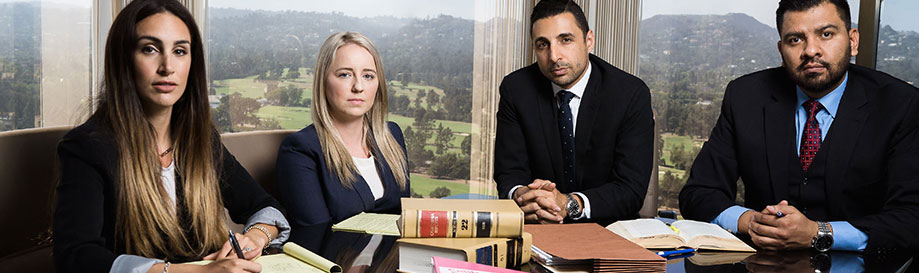
The foundation of our practice is a genuine compassion for our clients. As California lawyers, we constantly strive to uphold the rights of the individuals we represent.
If you’d like to learn more about the law of unpaid wages, consider reviewing our guide to California Employment Law. In this guide, we delve into more detail about your rights as an employee, as well as the legal obligations of your employer.
When you need dedicated, determined, and honest legal representation, contact the Los Angeles unpaid wages attorneys at Blackstone Law. If you’d like to learn more about the law on unpaid wages, consider reviewing our guide to California Employment Law. In this guide, we delve into more detail about your rights as an employee as well as the legal obligations of your employer. To set up a free case consultation with a Los Angeles employment attorney, fill out this form or call (310) 956-4054.
*Past results do not guarantee, warrant, or predict a similar outcome in any case. Every matter is unique and must be evaluated based on its own facts and circumstances.
Frequently Asked Questions: Unpaid Wages in California
Legal Disclaimer The information provided on this page is for general informational purposes only and does not constitute legal advice. Reading this content does not create an attorney-client relationship with Blackstone Law, APC or any of its attorneys. Every situation is different, and the application of law varies depending on individual facts and circumstances. If you believe you have an unpaid wage claim, you should consult with a qualified California employment attorney to understand your specific legal rights and options. Past results do not guarantee, warrant, or predict a similar outcome in any case. Every matter is unique and must be evaluated based on its own facts and circumstances.